
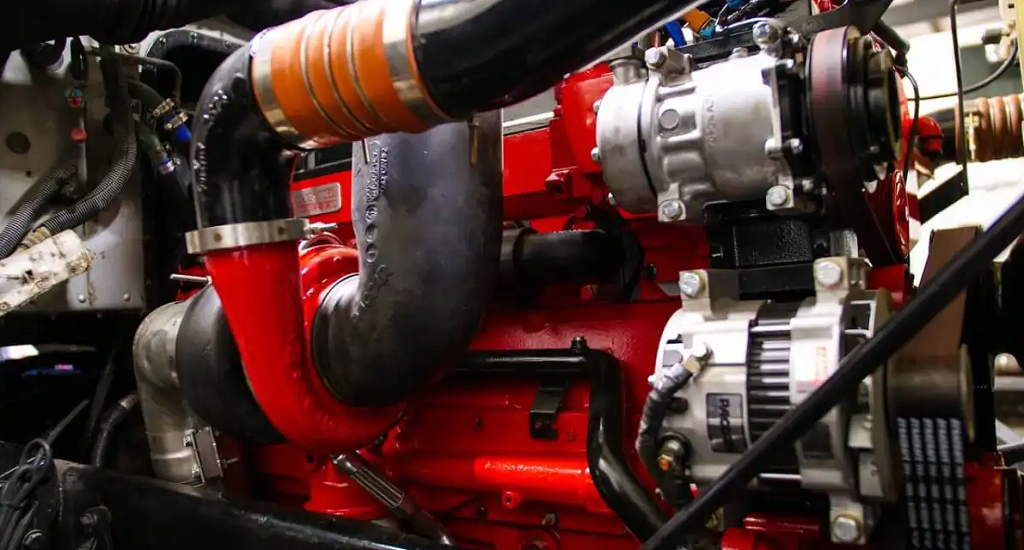
The heavy-duty truck exhaust system may be critical to performance and the environment. With the constant tightening of emission regulations, knowing how these complex systems work to keep your truck smooth and legal is becoming very important.
What’s in a Heavy-Duty Truck Exhaust System?
The components in a modern-day heavy-duty truck exhaust system are quite numerous, all working together in unison for the accomplishment of specific functions. The main aim of the design of a muffler exhaust system is to minimize the hazardous emissions pumped into the atmosphere. A standard-quality muffler is likely to provide quite a substantial degree of noise reduction, which usually assures a more comfortable drive. Some parts within an exhaust system optimize fuel efficiency by ascertaining excellent airflow while minimizing back pressure.
A proper exhaust system ensures that no harmful gases accumulate excessively, and the engine can perform at its best. The system must meet the local and national emission standards to be able to operate legally.
How Do These Components Work Together?
Your truck exhaust system is made up of several components, all functioning together in the conversion of harmful by-products emanating from the engine into less harmful emissions. An exhaust manifold gathers exhaust gases from several cylinders and channels them into a single pipe.
There’s something in diesel engines called a Diesel Particulate Filter that catches soot particles before they can escape out of the tailpipe. This is followed by the catalytic converter: a chemical reaction device to purify such pollutants as carbon monoxide (CO) and nitrogen oxides (NOx). Lastly, the muffler, located at the tail end of the system, quiets noise caused by gases escaping. All these components perfectly harmonize in your vehicle’s system to keep its emissions within the standards and simultaneously provide maximum performance.
Proper Maintenance Saves Big
At Supreme Truck Repair, we have seen firsthand how proper maintenance makes all the difference in an exhaust system’s performance. Neglecting this essential component may lead to increased emissions, reduced gas mileage, and possibly damaged engines. This will help prolong the life of the engine and save you from costly repairs in the future by keeping up with preventive maintenance, such as filter cleaning or replacement, and inspection of the pipes for leaks.
Exhaust Manifold
Your truck’s exhaust manifold gathers the hot exhaust gases pumped out by its engine cylinders, directing this gas through to a single outlet and further toward the rest of the system length. A good manifold design can go a long way for your engine. A good one will have smooth inner walls, reduce pressure drop against fluid flow, have cross-sectional flow areas in the runner pipes to reduce back pressure, and strategically placed bends to keep a constant flow of gas.
Catalytic Converter
The catalytic converter is the most important emission-reduction component of your truck. It’s a device using platinum, palladium, and rhodium to convert poisonous gases into nonpoisonous substances via several chemical reactions. Here’s what the catalytic converter does: carbon monoxide becomes carbon dioxide, hydrocarbons become water vapor, and nitrogen oxides break down into nitrogen and oxygen.
For a catalytic converter to work, it must achieve and sustain a specific temperature range between 300°C – 650°C (572°F – 1202°F) while running. It can cut harmful emissions by as much as 90% at these temperatures. Two important things make the catalyst effective: the right fuel mixture and engine timing. Both are major components, so if either does not work appropriately, then the converter will be malfunctioning.
A warning light in your dashboard will appear, and it will affect your truck’s performance. That is why the inspections should be done regularly to help you determine any possible problem with the catalytic converter before it becomes a costly repair or even causes emission test failures.
Diesel Particulate Filter (DPF)
Your truck’s DPF is an advanced air cleaner that captures harmful soot particles from exhaust gases before they can reach the atmosphere. This honeycomb-structured filter can trap particles as small as one micron—that’s 100 times thinner than a human hair!
The DPF has two different cleaning processes to keep its filtering efficiency:
Passive Regeneration occurs at highway driving speeds when the exhaust temperatures have reached the optimal level—approximately 600°F. At this elevated temperature, collected soot particles are automatically incinerated.
Active Regeneration occurs during city driving or idle situations. Your engine control module initiates a second fuel injection to elevate exhaust temperatures and burn off the trapped particles. You might observe a slightly higher fuel usage during this cycle.
Regular DPF maintenance will help to prevent clogging and ensure that your truck meets the emission standards. Here at Supreme Truck Repair, we have seen how proper DPF care can extend filter life and maintain optimum engine performance.
Muffler System
The muffler system in your truck controls the sound coming out of the exhaust gases. It changes the very loud noise from the engine to a much quieter hum. It’s what’s known as wave cancellation, where the sound waves created inside the chambers of the muffler cancel out the harsh frequencies created by the engine.
A good muffler design balances noise reduction with backpressure, which refers to the opposition encountered by exhaust gases as they move through the system. Too much backpressure, however, may harm your truck in terms of lowered power output from the engine, higher fuel consumption, great heat generation, and increased stress on engine parts.
Modern muffler designs incorporate special chambers, perforated tubes, and sound-absorbing materials to effect the best possible noise control while maintaining smooth exhaust flow. These components are engineered to precisely fit your truck’s specific engine characteristics and performance needs.
Exhaust Piping and Hangers
Your truck’s exhaust system requires the right support and routing to perform at its optimum. Mandrel bent tubing makes for smooth passages of exhaust gases, eliminating restrictions and keeping flow consistent throughout the system. This specialized bending process eliminates pipe collapse and keeps the diameter the same through every curve.
Exhaust hangers are vital to the longevity of your system. These heavy-duty components absorb engine vibrations to prevent metal fatigue, allow for expansion and contraction with temperature changes, keep pipes in proper alignment to avoid stress on connections and insulate other components from excessive motion.
The combination of the right quality piping and properly placed hangers allows your truck exhaust system to meet daily operation demands while at peak performance. A well-supported system reduces the risk of cracks, breaks, and premature wear that could lead to costly repairs.
EGR and DEF Systems
The EGR system in your truck can play a large role in reducing harmful emissions by recirculating a portion of the exhaust gases back to the engine’s combustion chamber. This results in lowered combustion temperatures and, therefore, lowered NOx emissions. Modern cooled EGR systems feature heat exchangers for cooling recirculated gases, precise EGR valves, and temperature sensors for optimum performance.
At Supreme Truck Repair, we have found that keeping the DEF clean and the EGR system in good working condition can considerably extend the life of your emission control systems. This saves costly repairs and ensures your truck will continue to pass emissions standards.
Tips on Heavy-Duty Truck Maintenance
Your exhaust system should be well maintained to ensure your truck runs at peak performance and to prevent expensive repairs down the road. Look for warning signs such as strange noises or vibrations from the exhaust, black smoke being emitted from the exhaust, decreased fuel efficiency, loss of engine power, or illumination of the Check Engine light. Some of the everyday things to watch out for include leaking exhaust pipes, which may be due to corrosion, clogged-up DPF filters, damaged gaskets, and mounting brackets, carbon buildup in the EGR system, and cracked exhaust manifolds.
The preventive maintenance schedule should include visual inspections every 15,000 miles, DPF cleaning at manufacturer-recommended intervals, regular DEF quality checks, exhaust system pressure tests, and mounting hardware tightness verification.
Professional service requirements include annual complete system visual inspection, diagnostic testing for peak performance, professional cleaning of parts, expert repair of noted issues, and service history documentation.
Here at Supreme Truck Repair, we have seen how regular maintenance saves our customers from unwanted breakdowns and costly repairs. Properly maintaining an exhaust system means the exhaust system guards the engine, keeps fuel efficiency in line, and keeps emissions under control.
Choose Supreme Truck Repair Services
A well-maintained exhaust system is important to your heavy-duty truck in terms of performance, compliance, and environmental impact. The emission control system in your truck works quite diligently to keep the harmful pollutants at bay while keeping the engine performance at its optimum.
Here at Supreme Truck Repair, we understand how complex today’s exhaust systems can be and how critical they are in meeting the ever-stricter emission standards. Our diesel mechanics are professionals, fully equipped with the expertise needed to handle all of your exhaust system requirements, from simple maintenance to the most complicated repairs.
Do not let the little problems grow into major ones! Not only is regular maintenance of the exhaust system on your truck a requirement, but it will also protect your investment and possibly save money in fuel expenses and future repairs by prolonging its life.
Ready to keep your heavy-duty truck’s exhaust system at its optimum? Call Supreme Truck Repair at (403) 603-0274 for trusted expert service. Let us help you keep your truck running clean, efficient, and compliant with current emission standards.