
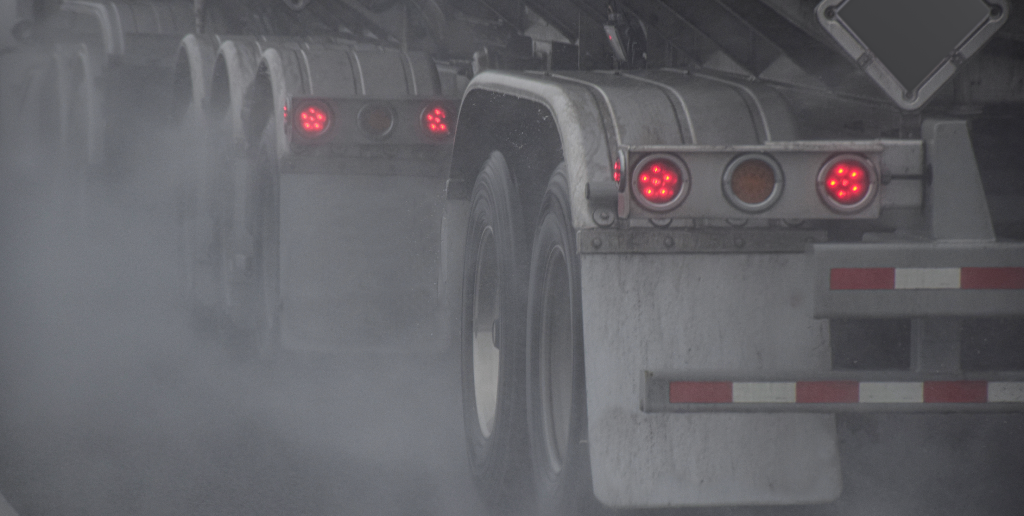
Did you happen to see black smoke spewing from your truck’s exhaust? The type of diesel fuel you use directly impacts those smoke emissions – as well as the performance of your truck. Fleet operators and heavy truck users have a real interest in this relationship in order to keep their vehicles operating efficiently and not poison the planet.
Poor fuel quality can lead to:
- Excessive smoke output
- Reduced engine efficiency
- Increased maintenance costs
- Higher environmental impact
- Potential compliance issues
The well-being of your diesel engine depends on fuel entering its system. If fuel quality tops your list of priorities in your diesel maintenance and repair routine, you can significantly boost combustion efficiency and put an end to those frustrating smoke emissions.
At Supreme Truck Repair, we’ve seen the difference that fuel management can make in truck performance ourselves. You may own one semi or run an entire fleet, but taking on the proper practices to keep fuel clean will protect your investment and result in cleaner operation on the highway.
Looking to change over? Let’s explore some effective maintenance practices that will enable you to upgrade your diesel fuel quality and minimize smoke emissions.
Understand Diesel Fuel Quality and How It Affects Smoke Emissions
The connection between diesel fuel quality and smoke emissions all comes down to a single component: sulfur content. The higher the sulfur content, the more sulfur oxides it emits when combusted, directly adding to the formation of particulate matter – the black smoke you might notice coming out of exhaust pipes.
The Transition to Ultra-Low Sulfur Diesel
One of the largest changes occurred in 2006 when ultra-low sulfur diesel fuel became a requirement. This change was a landmark for emission control since lower sulfur equals less sulfate particle formation. And that means? Cleaner emissions and fewer wisps of visible smoke from the exhaust system on your truck.
How Diesel Fuel Quality Affects Your Truck’s Emissions
Your truck’s emission control system depends heavily on fuel quality through these key factors:
Particulate Matter Formation: Higher sulfur content = increased soot production
Exhaust Opacity: Better fuel quality = clearer exhaust emissions
Engine Performance: Clean-burning fuel = optimal combustion efficiency
The quality of diesel fuel affects your engine’s performance at a molecular level. When sulfur content is properly regulated, it creates a chain reaction of benefits:
- Reduced engine deposits
- Better combustion efficiency
- Lower maintenance needs
- Extended engine life
- Improved emission control system longevity
Why Fleet Owners Should Care
To the owner and manager of the fleet, awareness of this relationship ensures both vehicle performance and emission control standards. Periodic diesel repair service with fuel system check is required so that your trucks can operate on the cleanest possible fuel.
Key Fuel Properties Affecting Combustion Efficiency
Your truck’s combustion efficiency hinges largely on two very important fuel properties: cetane number and aromatic hydrocarbon content. Let us learn how they contribute to your car’s performance and smoke emissions.
Cetane Number: The Ignition Quality Indicator
A fuel’s cetane number quantifies its pressure ignition quality. Consider it as your diesel fuel’s willingness to burn. The optimal cetane number is somewhere in the range of 45 to 55, and higher numbers mean:
- Faster ignition timing
- Smoother engine operation
- Reduced engine knock
- Better cold-start performance
When your fuel’s cetane number is low, it causes slow ignition. Slow ignition results in incomplete combustion, which causes excessive smoke discharge and can destroy the engine.
Aromatic Hydrocarbons: The Soot Makers
Aromatic hydrocarbons are hydrocarbons that contain carbon and are naturally occurring in diesel fuel. These hydrocarbons are of great concern to your engine performance. They are immune to complete combustion, release more soot during combustion, promote particulate matter in exhausts, and enhance visible smoke.
Today’s refining processes especially cut aromatic content in diesel fuel. Reducing this results in cleaner-burning fuel with less soot and maximizes your engine’s combustion efficiency. What does that mean? Cleaner exhaust and improved engine performance for your semi-truck.
Maintenance checks with a professional semi-truck repair center can help keep your engine operating with maximum combustion efficiency and the right fuel properties.
Additives, Lubricity, and Their Role in Diesel Repair
The transition to ultra-low sulfur diesel introduces a quiet problem: lower natural lubricity. This decrease affects your engine’s wear and tear and can contribute to higher maintenance and repair requirements.
Essential Fuel Additives for Engine Protection
Key fuel additives are essential in the upkeep of the health and functioning of your diesel engine. Detergents keep the fuel system clean of deposits, and they ensure injectors and other components are clean for even combustion and engine running. Lubricity improvers are particularly critical in the ultra-low sulfur diesel era, as they regain lost natural lubricity properties that assist in reducing wear on precision engine components. Only certificated additives that are specifically designed for new diesel engines should be employed, as these blends have been tested for performance and compatibility, delivering constant protection and preserving total engine life.
Your engine’s lifespan is under optimal lubrication. Without proper lubricity, metal-to-metal contact increases in fuel system components, particularly high-pressure fuel pumps and injectors. These sensitive parts require constant lubrication in order to function well and prevent premature wear.
Warning Signs of Poor Additive Quality
Warning signs of poor additive quality may take different forms. More smoke emission is usually the first symptom you will notice, which means that the combustion process is not taking place as it would. Other than that, unbalanced engine operation, e.g., uneven idling or slow response in accelerating, is indicative of inefficient, incomplete, or abnormal fuel combustion. Excess deposit formation in the fuel system is also a sign of trouble since it clogs injectors and causes further operating problems in the future. All these lead to reduced fuel efficiency, and therefore, it is evident that maximum engine performance with reduced harmful emissions requires quality additives.
When dirty fuel or poor-quality additives are burned, it triggers a chain of ailments. Injector nozzle deposits can result in interference with the fuel spray pattern and incomplete burning. Incomplete burning produces more smoke out of the exhaust and less efficient engines.
The secret is choosing superior, approved additives that are formulated to apply in ultra-low sulfur diesel. They give the right lubricity without leading to deleterious deposit formation, so your engine will be more efficient and cleaner.
Control of Fuel Contaminants for Better Emissions
Your truck fuel system is under attack constantly from a host of contaminants that can cause significant damage to its performance and emissions. Water contamination and bacterial growth are two of the most detrimental attackers in diesel fuel systems.
Common Fuel System Contaminants:
- Water droplets from condensation
- Microbial colonies thriving in fuel tanks
- Particulate matter from storage tanks
- Debris from fuel handling
These unwanted elements create a hostile environment in your fuel system, disrupting the combustion process. When contaminants mix with your diesel fuel, they create an irregular spray pattern through the injectors. This irregular pattern leads to:
- Uneven fuel distribution
- Poor atomization
- Incomplete fuel burning
- Increased smoke emissions
Prevention Through Maintenance
Regular fuel system maintenance serves as your first line of defense against contamination. A robust maintenance schedule should include:
- Weekly tank inspections
- Regular fuel filter replacements
- Professional fuel system cleaning
- Tank drainage to remove water buildup
Good filtration is the essence of contamination control. Your truck’s fuel filtration system operates day and night to capture harmful particles from damaging vital engine parts. A clean, well-maintained filter system ensures good fuel atomization and complete combustion, which effectively minimizes smoke emissions from your exhaust.
Investment in pro semi truck repair work for routine fuel system service prevents damage to your engine as a result of contamination. Investing in this helps reduce smoke emissions to their lowest point while ensuring high combustion efficiency.
Practical Diesel Repair Tips for Reducing Smoke Emissions
Regular monitoring and proactive maintenance are essential steps in managing smoke emissions from your diesel engine. Here are proven strategies to keep your emissions in check:
Use Diagnostic Tools for Early Detection
- A diesel smoke meter measures exhaust opacity – higher readings signal potential issues with fuel quality or engine components
- Regular opacity testing helps identify problems before they escalate into major repairs
- Track opacity readings over time to establish baseline performance for your vehicle
Maintain Optimal Injection Systems
- Monitor injector spray patterns through regular inspections
- Replace worn injectors that show signs of uneven spray distribution
- Clean injectors periodically to prevent carbon buildup and ensure proper atomization
Follow a Strategic Filter Maintenance Schedule
- Replace fuel filters according to manufacturer specifications
- Install high-quality filters designed for ultra-low sulfur diesel
- Check filter housings for proper sealing to prevent contamination
Choose Quality Fuel and Additives
- Use certified ultra-low sulfur diesel from reputable suppliers
- Select additives specifically formulated for modern diesel engines
- Verify additive compatibility with your engine’s emission control systems
These preventive steps shield essential items such as EGR valves and particulate filters from premature wear. A well-maintained fuel system minimizes smoke emissions and prolongs the life of your engine’s emission control devices.
The Role of New Engine Technologies in Emission Control
New diesel engines contain advanced emission control systems that require high-quality fuel. Two essential components of such systems are:
Exhaust Gas Recirculation (EGR) – retards nitrogen oxide emission by re-circulating exhaust gas to the engine
Diesel Particulate Filters (DPF) – traps and removes soot particles from the exhaust
These advanced systems are highly fuel-sensitive. Operation on poor-grade diesel will set a chain of faults in motion, such as excessive carbon buildup in EGR valves and premature clogging of the diesel particulate filter (DPF). When these components are worn, back pressure in the exhaust system develops, which, over time, can decrease engine performance overall. What occurs is generally an apparent rise in the volume of smoke emitted, so lower-quality fuel is clogging up your engine’s emission control technologies with particulates and deposits.
Your choice of fuel directly impacts these emission control components. Poor-quality diesel creates more deposits and particulates, which puts your DPF under higher pressure and requires it to regenerate even more often. It does this at the expense of your engine’s emission control systems.
Regular maintenance of these components is essential for optimal performance:
- Professional DPF cleaning
- EGR system inspection
- Fuel system diagnostics
- Quality fuel filter replacement
By investing in premium diesel and keeping your emission control components in top working order, you safeguard these valuable pieces while making your truck eco-friendly. Through these preventive measures, you avoid outrageous repair bills and maximize the longevity of your engine’s emission control technology.
Choose Supreme Truck and Trailer Repair
How your truck performs and how it is kind to the environment is in the hands of the quality of diesel fuel you use and how you keep it in check. By doing what we’ve outlined here – e.g., monitoring cetane numbers and keeping your fuel system in good working order – you can eliminate most smoke output and protect your engine from damage.
Begin today to have your fleet operate more efficiently. Operate on premium-grade ultra-low sulfur diesel with approved additives. Practice routine fuel system maintenance practices. Test for exhaust opacity with diagnostic equipment. Check fuel systems to be contaminant-free and clean.
We comprehend the intricacies of diesel engines and emission systems at Supreme Truck Repair. Our skilled mechanics are able to assist you with the maintenance of healthy fuel systems and reducing emissions. We are offering complete-around diesel repair services to suit your needs.
Ready to cut smoke emissions and maximize the performance of your truck? Get expert diesel repair from Supreme Truck Repair at (403) 603-0274 and keep your fleet clean and running efficiently.