
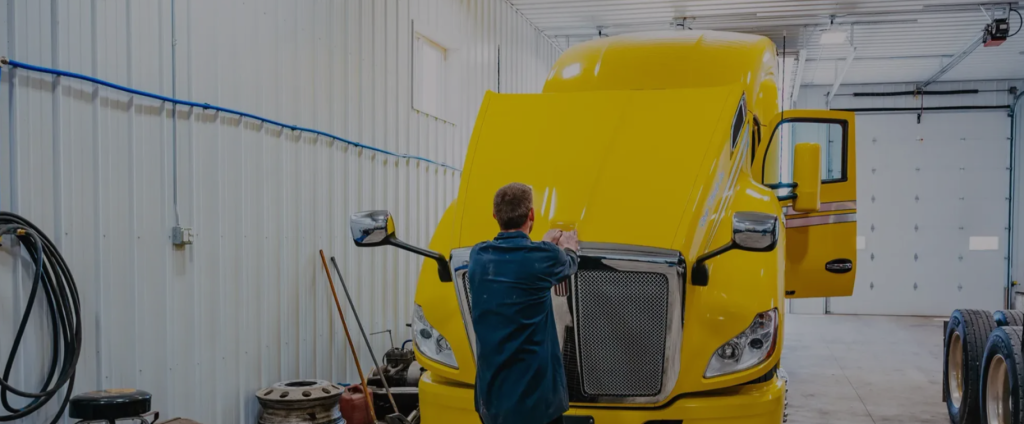
One of the most difficult skills you must master as a truck driver is backing up a tractor-trailer. It’s more than just going in reverse; it’s an art—precise, patient, and with the right approach, especially in the case of long-wheelbase trucks. Think about it: You’re maneuvering a massive vehicle over 300 inches long from wheel to wheel! Every inch counts when you’re trying to get through tight spots, busy truck stops, or loading docks. One wrong move might result in expensive accidents or damaged equipment.
At Supreme Truck Repair, we’ve seen how critical regular truck maintenance is to safely execute backing maneuvers. Our team of skilled diesel mechanics works with drivers to keep their rigs in the best shape possible, from steering systems to brake parts.
Limited visibility in blind spots, varying trailer lengths, complex jackknife maneuvers, tight spaces and obstacles, and weather conditions affecting traction all present significant challenges. Whether you’re an experienced driver or a new one, learning safe and efficient backing techniques is the key to your success on the road.
Understanding Wheelbase
Wheelbase is the single most important dimension in a truck’s maneuverability and performance: it’s defined from the center point of the front axle to the center point between the drive axles.
Even by the early 1960s, U.S. regulations established the maximum length limit of 55 feet for tractor-trailer combinations. Since shippers are demanding even longer trailers, pressure is being placed on the manufacturing industry to keep up with shortened tractors so as to avoid the risks of being non-legal.
Regulatory Changes and Their Effects
The federal government heard this complaint and, beginning in 1970, eliminated the overall length limits, assigned the setting of overall length limits to the individual states, began only measuring the trailer length, and allowed an extended length tractor for driver comfort. These changes brought improved ride quality on rough roads, increased swing depth clearance between tractor and trailer, improved airflow over refrigerated trailers, and larger size of sleeper quarters for drivers.
Current Wheelbase Measurements and Specifications
Ideal wheelbase dimensions today depend on the application. Drop-nose trucks typically measure 200-235 inches, long-hood conventionals range from 260-280 inches, and specialized haulers for extended stays can exceed 300 inches.
The right wheelbase specification depends a lot on your particular hauling needs, driving conditions, and comfort requirements. An adequately specified wheelbase gives maximum performance but retains maneuverability needed for daily operations.
Maneuvering Techniques for Backing Up
Backing up a tractor-trailer requires finesse, practice, and special techniques. Let’s go over some old favorites to help master this critical skill.
Blindside Backing
The most surprising example from our video has to be how experienced drivers do blindside backing. One of the veteran drivers with us had this to say about his unique technique for long-wheelbase trucks: Use the sleeper’s back window as a visual guide, track the trailer’s position through this window, similar to backing up a car, switch to mirrors once the trailer aligns with the target spot, and complete the maneuver by straightening the tractor with the trailer.
Executing a Jackknife Maneuver
The jackknife technique proves particularly useful in tight spaces. Position your truck at a sharp angle to the intended parking spot, create a wider turning radius for better control, use reference points to gauge your position, and make small, controlled turns to avoid over-steering.
To succeed, start wide to leave space for correction, drive slowly and purposefully, always spot if possible—especially in new terrain, and practice on open ground before moving to tight quarters. Be aware that longer wheelbases will require wider arcs. Those maneuvers are complicated with long-wheelbase trucks, but learning them will mean you can negotiate even the toughest parking spots. Professional drivers show that you can put these bigger vehicles into very tight spaces with good technique and patience.
Common Challenges in Backing Up Long-Wheelbase Trucks
Long-wheelbase trucks present unique challenges that can test even the most seasoned drivers. High siding happens when your truck gets hung up on its fuel tanks while negotiating steep driveways or sharp inclines. Picture this: As your truck crests a sharp point at the top of a driveway, the extended length between your drive axles and fuel tanks creates a teeter-totter effect. While shorter wheelbase trucks can clear these obstacles quickly (their drive axles lift the truck at the rise), longer trucks risk getting hung up on their fuel tanks.
Weight distribution is both a blessing and a challenge with extended wheelbases. The longer wheelbases help isolate engine weight better on the steering axle, making it easier to distribute load weight between drives and trailers. However, many private scales at factories haven’t kept up with growing truck lengths. The solution often scales axle by axle, which takes extra time and effort.
These challenges only intensify with wheelbases over 300 inches. While mega carriers will generally run wheelbases in the 220-235 inch range for 53-foot vans, some specialized operations call for longer configurations. For instance, companies such as Reliable Transport use 300+ inch wheelbases to accommodate 120-130 inch sleeper cabs for drivers who spend months on the road.
Maintenance Considerations for Safe Backing
The success of safe backing maneuvers is highly dependent on the mechanical condition of your truck. A sound tractor-trailer handles easier when steered and will perform better in critical situations with reliable brakes during backing operations.
Proper maintenance of steering system components is crucial, including regular inspection of tie rod ends, proper steering gear lubrication, and power steering fluid level checks. The brake system health must be monitored through brake pad wear checks, air system integrity verification, and brake line condition assessment. Mirror systems require clean, properly adjusted mirrors, secure mounting brackets, and clear visibility in all weather conditions.
At Supreme Truck and Trailer Repair, we specialize in comprehensive diesel repair services that keep your truck operating at peak performance. Our certified technicians perform detailed inspections and maintenance on heavy-duty brake, steering, suspension, electrical, and drive train components.
Regular maintenance visits help detect potential issues before they affect your backing maneuvers. A well-maintained truck ensures better control and responsiveness while executing precise backing movements in tight spaces. We recommend performing routine maintenance checks based on mileage and operating conditions. This helps prevent unexpected mechanical issues that could compromise your safety during backing operations.
Choose Supreme Truck and Trailer Repair
It takes dedication, practice, and proper equipment maintenance to master the art of backing up a tractor-trailer. Your success on the road starts with knowledge of your truck’s wheelbase and safe driving practices at all times. We have seen good drivers like Richard maneuver even 312-inch wheelbase trucks into tight spots, which says something about what can be done with proper training and experience.
You, too, can build this level of expertise by practicing backing maneuvers regularly in safe environments, keeping your vehicle well-maintained, learning from experienced drivers, and understanding your truck’s specific limitations and capabilities.
At Supreme Truck Repair, we support your journey toward safer, more efficient trucking operations. Our team of skilled diesel mechanics ensures your vehicle performs at its best, giving you the confidence you need for challenging maneuvers. Need professional maintenance or diesel repair? Call us at (403) 603-0274. We’re here to help keep your truck running safely and efficiently on the road.