
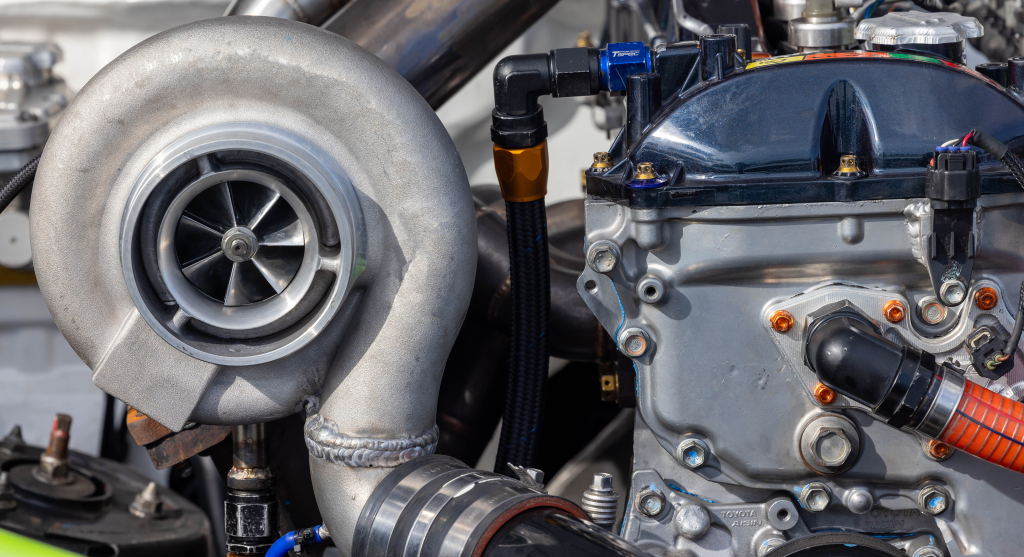
The turbocharger is an important component that is responsible for much of your truck’s power and performance. This amazing piece of technology is a power booster for your engine, compressing more air into the combustion chamber to achieve more powerful and efficient burns.
You can consider your turbocharger to be a guardian of engine power – but who is guarding the guardian? That is where wastegates come in. They are the behind-the-scenes champions of your turbo system that guard your engine against undermining itself by controlling boost pressure.
The Dangers of Undisciplined Boost
If wastegates are malfunctioning, your turbocharger can create serious problems for your engine. When it is faulty, it can release extremely high levels of boost into your engine, putting huge stress on internal components. This excess boost can generate dangerous levels of heat and pressure, leading to extreme engine damage. These issues will also significantly shorten your truck’s lifespan, potentially resulting in costly repairs or complete engine failure.
At Supreme Truck Repair, we’ve seen time and time again how a well-functioning wastegate rescued engines from complete ruin. We’d like to inform you of these important pieces and keep your truck in top running condition.
Meanwhile, let’s see how the world of turbochargers and wastegates – the power couple that delivers power and protection to your engine operates.
How Turbochargers Work
Your truck’s turbocharger is a phenomenal piece of technology that recycles waste exhaust gases back into clean energy. Picture this: while your engine is operating, it generates hot exhaust gases that otherwise would just blow out your exhaust pipe. But instead, they’re routed through the turbine wheel of your turbocharger, spinning it at blinding speeds – up to 150,000 RPM!
This high-speed spin drives the compressor wheel on the opposite side of the turbocharger. The compressor wheel draws in clean air from your truck’s intake, compresses it, and pushes it into your engine’s combustion chambers. This compressed air has a higher concentration of oxygen molecules than regular atmospheric air, enabling your engine to burn fuel more effectively.
The Magic of Boost Pressure
The quantity of pressurized air your turbocharger supplies is quantified as “boost pressure.” Consider the boost to be the additional pressure of air over the regular atmospheric pressure your engine is supplied with. Higher boost pressure means:
- More oxygen for combustion
- Increased fuel efficiency
- Enhanced engine power
- Better throttle response
Your engine’s performance depends heavily on maintaining the right boost pressure levels. Too little boost reduces power output, while excessive boost can stress engine components. That’s why proper boost pressure regulation is crucial for:
- Protecting engine components
- Maintaining optimal fuel economy
- Ensuring consistent power delivery
- Extending engine life
This delicate balance of power and protection is what imbues turbocharger systems with their power and sophistication – and requires careful attention and maintenance in order to function at peak.
Understanding Wastegates: The Key to Effective Boost Control
A wastegate is a turbocharger safety valve. It does not receive much credit, but it plays a very crucial role in making sure your engine runs as well as it can and can do its job at the level it should be. This pressure relief valve is what keeps the amount of boost your turbocharger provides in check.
Here’s How Your Wastegate Works
Your wastegate constantly checks the pressure accumulating in your engine’s intake manifold. When the boost is at a critical level, the wastegate opens automatically and diverts excess exhaust gases away from the turbine wheel. This precious function stops sudden pressure spikes that would destroy your engine, a vital safety feature in your turbocharger system.
The Risks of Improper Boost Control
If your boost control malfunctions, your engine is in grave danger. Uncontrolled cylinder pressure will cause engine knock, and internal engine parts will wear out excessively too early. The most feared risk, though, is the very real possibility of complete engine failure. These conditions clearly demonstrate the highly critical role proper boost control plays in your turbocharged engine configuration.
The Need for Accuracy in Wastegate Operation
Your wastegate precision is crucial – it needs to react quickly and accurately to pressure fluctuations. Consider it a system that releases pressure in milliseconds to safeguard your investment. As your boost pressure builds to excessively high levels, your wastegate activates, releasing only the correct pressure to maintain your engine in optimal ranges.
Consistent Boost Levels at High RPMs
As you go up in RPMs, the function of your wastegate becomes even more important. It maintains the boost pressures constant in your power curve within your engine. This enables you to rely on a consistent output regardless of whether you’re cruising down the highway or towing up a steep grade.
Types of Wastegates: Internal vs. External
In picking a wastegate for your turbo system, you will have two main options: internal wastegates and external wastegates. Let us see how each one can affect your engine performance.
Internal Wastegates
- Built directly into the turbocharger housing
- Standard equipment on most factory-turbocharged vehicles
- Ideal for daily drivers and stock power applications
- Compact design saves space in tight engine bays
- Limited flow capacity due to smaller valve size
- Restricted to manufacturer’s preset boost levels
External Wastegates
- Separate standalone units mounted outside the turbo
- Larger valve designs allow greater exhaust flow
- Customizable spring rates for precise boost control
- Perfect for high-performance builds and racing applications
- Enhanced durability with dedicated cooling
- Ability to handle higher boost pressures
The diaphragm mechanism in both types works similarly, but external wastegates give you more control over your boost settings. If you’re running stock power levels, an internal wastegate will serve you well. For those seeking serious performance gains, an external wastegate’s superior flow capacity and adjustability make it the clear choice.
Your driving goals and power requirements should guide your wastegate selection. Stock turbo setups with internal wastegates can safely work to 400 horsepower, but external wastegates must be used on builds above those figures.
Wastegate-Related Turbo Issues That Are Common and How to Prevent Them
Your wastegate on your turbocharger is essential to the health of your engine, but there are a number of issues that can arise if you don’t treat it right. These are the most important issues you should be aware of:
1. Boost Creep
Boost creep happens when your wastegate cannot keep up with desired levels of boost, causing harmful pressure spikes that ruin engine components. It is usually caused by undersize wastegates or mechanical problems and can result in a blown head gasket and destroyed pistons.
2. Wastegate Sticking
Wastegate sticking results due to carbon deposit interfering with smooth valve action, allowing erratic boost pressure and unstable engine operation. This issue may result in sudden power surges.
3. Spring Fatigue
Spring fatigue occurs when weakened springs fail to regulate pressure effectively, creating fluctuating boost levels and reducing engine efficiency. This issue can cause premature engine wear.
Prevention Tips
To prevent these issues from occurring, here are some tips you can follow:
Regular Maintenance
- Schedule routine inspections every 30,000 miles
- Clean wastegate components to prevent carbon buildup
- Check actuator operation and spring tension
- Listen for unusual whistling sounds or boost fluctuations
Monitoring Best Practices
- Install a boost gauge to track pressure levels
- Pay attention to sudden changes in engine performance
- Keep detailed maintenance records
- Address unusual sounds or behavior immediately
Remember to check your wastegate’s operation during regular service intervals. A properly functioning wastegate protects your turbo system and ensures consistent engine performance.
The Impact of Boost Control on Overall Engine Performance
Proper boost control is your engine’s power regulating system, and it plays a direct role in its performance and lifespan. A properly controlled boost provides the proper amount of air at the proper time to make an optimum air-fuel mixture for optimum power. The Impact of Boost Control on Engine Performance
Let’s examine what boost control does to your engine’s performance. Smooth, progressive power delivery throughout your engine’s operating range of RPM is provided by good boost control, and improved air-fuel ratios created by controlled amounts of boost allow for the best fuel economy. Additionally, a controlled boost avoids harmful pressure spikes that would destroy internal components.
One major advantage of properly controlled boost is the impact it has on turbo lag. With equally high pressure levels, your engine will respond sooner to throttle demand. This results in faster acceleration when you do need it, particularly in such time-sensitive applications as merging onto highways or overtaking slower vehicles.
Advancements in boost control systems can vary depending on different driving conditions, and boost pressure can be adjusted according to factors such as engine temperature, change in altitude, driving conditions, and load conditions.
Such flexibility features make your engine operate in the most optimal way when it is loaded or cruising on highways.
The Role of Professional Help in Turbocharger Maintenance
Your turbocharger system should be well taken care of by experts to run at its optimum and prevent costly repairs. Supreme Truck Repair employs skilled technicians with advanced knowledge and high-tech diagnostic equipment to repair complicated turbocharger issues.
Professional Turbocharger Maintenance and Repairs
We have seen enough examples where DIY fix-up has led to engine damage. Correct wastegate maintenance involves precise boost pressure setting adjustment, boost control difficulty recognition at the level of professionals, professional equipment and test tools, and in-depth understanding of turbocharger functioning.
We conduct detailed on-site diagnostics and repairs to make your engine perform optimally all the time. Our experts have knowledge in wastegate repair and replacement, turbocharger system diagnostics, and full diesel engine repair services. With our detailed boost control system optimization packages, we make sure your engine is in its optimum state, yet it is tough enough.
Leave your diesel engine in the experts’ hands, who know how to maintain a fine balance among turbochargers, wastegates, and engine performance. Our accurate diesel repair work takes care of your precious engine investment and provides hassle-free performance over the long haul.
Choose Supreme Truck and Trailer Repair
The operation and lifespan of your truck rest on a functional wastegate. This all-important part is what keeps turbo issues at bay by safeguarding your engine against excessive boost pressure and providing your engine with maximum power available.
A well-serviced wastegate is your best guard against expensive repair bills and unplanned breakdowns. Don’t wait until the day turbo troubles hit – get proactive today and protect your investment.
Want your turbocharger system to perform to its potential? Our skilled team at Supreme Truck Repair specializes in diesel engine maintenance and repair. Give us a call at (403) 603 0274 to book your service appointment. We’ll ensure your engine runs smoothly and your business keeps progressing.